
Buying cashew processing machinery is a long-term decision. The equipment you choose will shape your kernel recovery, labor needs, running costs and product quality for many years. A low price can look attractive on a quotation, but the real cost shows up later in broken kernels, downtime and missing spare parts.
This guide gives you an 8-point checklist for evaluating a cashew machinery manufacturer, the questions worth asking before you sign, and the warning signs to watch for. If you are still learning how the process works, start with our overview of the cashew processing steps or the complete cashew processing line guide.
Manufacturer, Trader or Integrator: Know Who You Are Buying From
Before comparing details, understand what kind of company you are dealing with.
- Manufacturer: designs and builds machines in its own facility. It controls quality, can customize equipment and can fix design problems at the source.
- Trader or agent: sells machines made by others. Prices may look good, but technical knowledge and after-sales support depend on a third party.
- Integrator: combines machines from several makers into a line. This can work well if the integrator has real process experience, but responsibility can become unclear when something goes wrong.
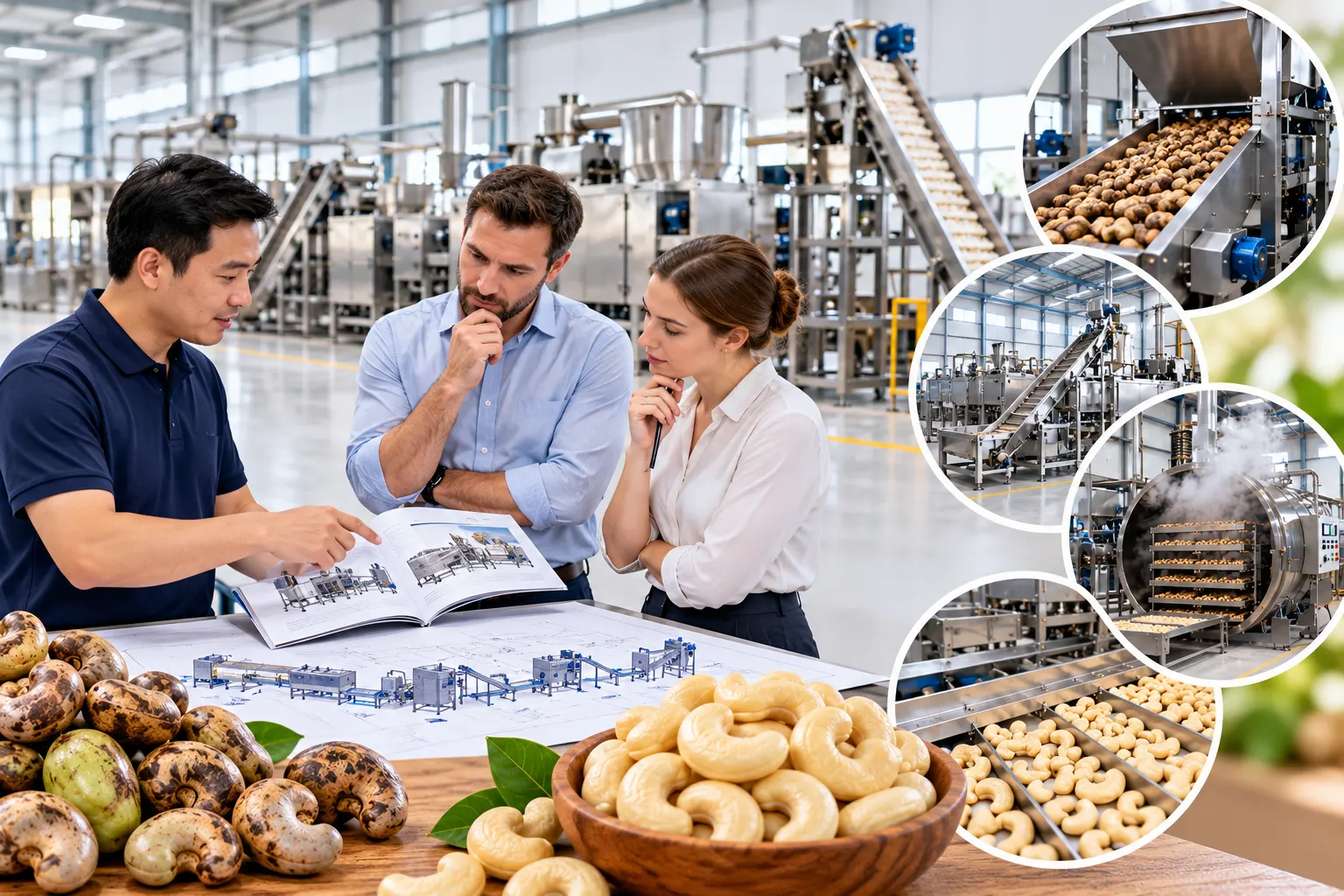
For a cashew factory, a manufacturer with in-house engineering usually offers the clearest line of responsibility, from design through installation and support.
The 8-Point Checklist
1. In-House Design and Manufacturing
Ask where the machines are designed and built. A supplier with its own engineering team and workshop can adapt designs to your raw material and fix issues quickly. Ask to see the production facility, by visit or by video.
2. Specialization in Cashew
Cashew shells and kernels behave differently from other nuts. A supplier that focuses on cashew understands details such as shell structure, kernel fragility, moisture sensitivity and the importance of calibration before shelling. General food machinery makers often miss these points.
3. Ability to Customize
Nut size, shell hardness and moisture vary by origin and by season. Check whether the supplier can adjust machine design or settings for your raw material instead of only offering fixed catalogue models.
4. Proof of Performance
Request machine specifications and, if possible, a test or demonstration with your own raw nuts. Compare claims such as capacity and whole-kernel rate with what you see in a real run. Treat any promised figures without conditions (nut origin, moisture, size) with caution.
5. Reference Projects
Ask for completed projects similar to yours in capacity and region, and ask whether you can speak to those customers. A supplier that has delivered full lines understands how machines work together, not only how each machine works alone. You can see examples on our projects page.
6. Installation, Training and Commissioning
A good machine installed badly performs badly. Confirm who handles installation, whether engineers will be on site, how operators and maintenance staff are trained, and what support exists during the first production season.
7. Spare Parts and After-Sales Support
Cutting parts, screens, belts and bearings wear out. Ask which parts are wear items, how long delivery takes, whether the supplier recommends a starter spare parts package, and how technical questions are handled after the warranty period. For more on planning, see our maintenance checklist for cashew machinery.
8. Transparent Quotation and Warranty
A clear quotation lists what is included: machines, control systems, steam or air requirements, installation, training, transport and warranty terms. Hidden exclusions are a common source of later disputes.
Questions to Ask Every Supplier
Use the same list with every company so you can compare answers fairly.
- Do you design and manufacture the machines yourself?
- Which cashew projects have you delivered, and in which countries?
- Can you test my raw nuts, or show a run with similar nuts?
- What capacity and kernel recovery can I expect with my nut origin and moisture level?
- How do you handle machine adjustment for different nut sizes and seasons?
- What is included in the price, and what is not?
- Who installs the machines, and how long does installation take?
- What spare parts do you recommend, and how fast can you ship them?
- How is operator and maintenance training handled?
- What happens if the line does not meet the agreed performance?
Red Flags to Watch For
- No factory or workshop information, or reluctance to show one.
- Capacity claims without conditions, such as no mention of nut size or moisture.
- No cashew references, or references only from unrelated industries.
- A price far below others without a clear explanation of materials, build quality or scope.
- Vague after-sales terms, with no named support process or spare parts plan.
- Pressure to decide quickly before you have seen a test or visited a reference plant.
Compare Total Cost, Not Only Purchase Price
The cheapest machine is not always the lowest-cost option. When comparing quotations, include:
- Kernel recovery: even a small difference in whole-kernel rate changes revenue noticeably over a season.
- Labor required: more manual work means higher recurring cost.
- Energy and steam use: steaming and drying are significant operating costs.
- Maintenance and spare parts: wear items and downtime affect real output.
- Material quality: stainless steel contact parts and good fabrication last longer and support hygiene requirements.
Complete Line or Single Machines?
Some buyers need one machine to upgrade an existing plant, while others need a full new line. If you are building from scratch, a supplier that can design the complete line lowers the risk of capacity mismatch between stages. Our upcoming article on turnkey lines versus individual machines covers this decision in detail.
Frequently Asked Questions
Should I choose a local supplier or an overseas one? The more important factors are cashew expertise, support capability and spare parts availability. Many international buyers work with Vietnamese manufacturers because Vietnam has a large cashew processing industry and long experience in building this equipment.
Can I visit the factory before buying? You should. A visit lets you see machines in production, ask technical questions and meet the engineers who would support your project. If travel is difficult, request a detailed video walkthrough.
How much customization is realistic? It depends on the supplier. Adjustments for nut size, capacity and layout are common. Ask what is standard and what requires redesign, and how each affects price and delivery time.
What should be in the contract besides price? Scope of supply, delivery schedule, installation and training terms, warranty period, spare parts, performance expectations and payment conditions.
Talk to TPG Cashew
TPG Cashew designs and manufactures cashew processing machinery in Vietnam and supports customers from line planning through installation. Learn more about our manufacturing capability or tell us about your plant.
Discuss your project or request a quotation to receive a configuration suited to your raw material and capacity.
